freepik.com
Mama’s Best Advice Words of Wisdom Digest
“I Look Like My Father.”
A tale of transference.
freepik.com free copied 1/3/25
In practicing almost any skill or task, the longer you practice it, the greater the chance you’ll encounter a new challenge or be confronted with an issue, which leads you to revisit, review, and reconnect with the theory ending in a stronger understanding. Psychotherapy clinicians are trained in a plethora of human dynamics and behaviors. One of the most important in the delivery of psychotherapy is transference and countertransference, two naturally occurring human behaviors that are part of the system of human defense mechanisms. We see this behavior often, for example, you see someone who reminds you of your aunt, and you say, “Wow, you look so much like my aunt.” If you’ve had good experiences with your aunt, there could be a tendency to feel a positive connection with the stranger, but if you’ve had a negative experience, your initial response to this individual could be uncomfortable, suspicious, tentative, or negative. Some of your feelings can be below the conscious level, where you’re not cognizant of how strongly these feelings are impacting your sense of the person. So these are often subtle responses that go unnoticed in our contact with individuals.

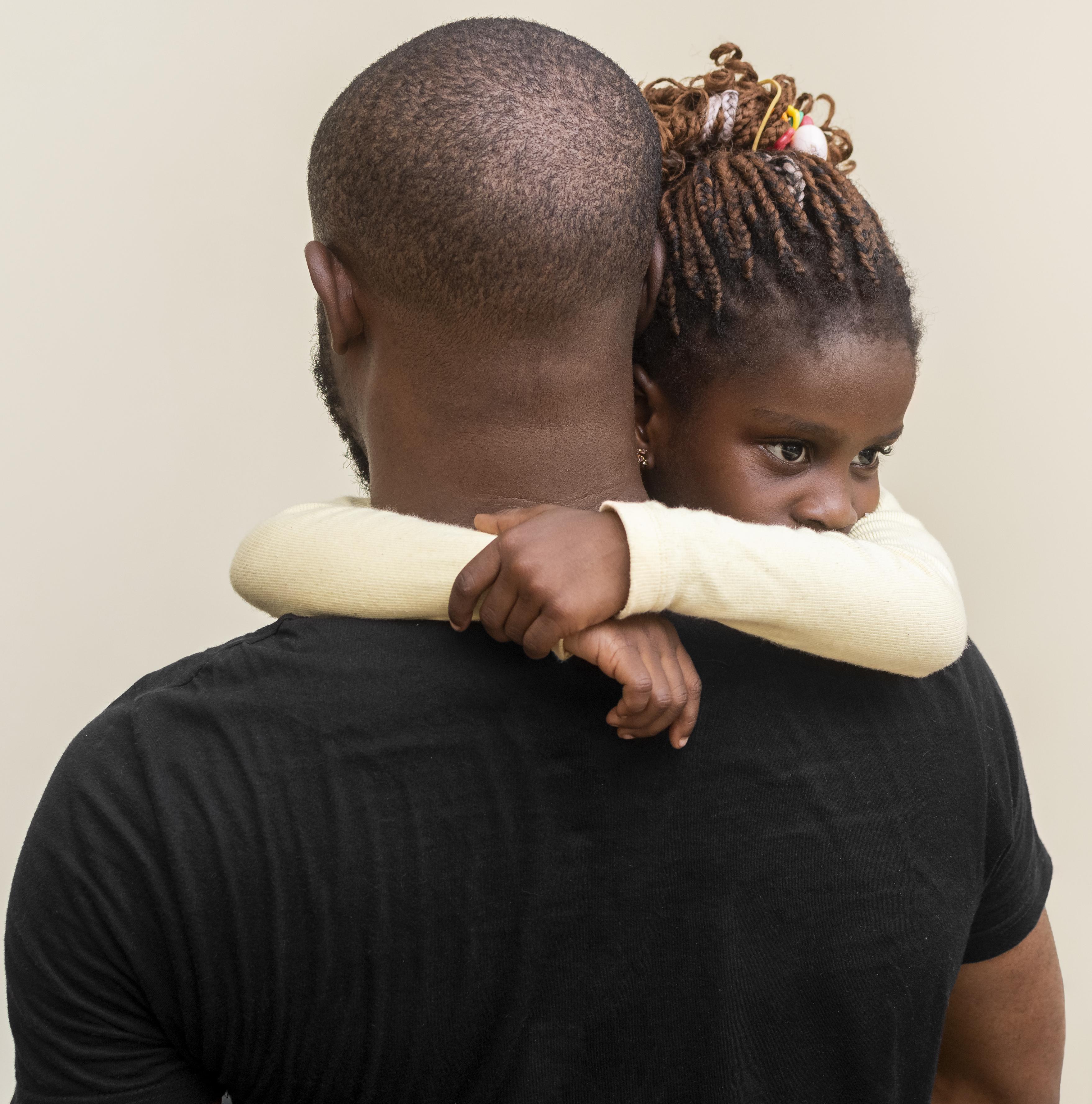
As a therapist, I often work with my patients’ childhood memories. And, recently I reflected on my own childhood memories, memories of my father. As a kid, I often heard, “You look like your father.” I was certainly a daddy’s girl and for my sister, it was the opposite; she favored my mother. In retrospect, I was seen as secure and willful and my sister was more of the one who was vulnerable and needed protection. I was older and had for a relevant period experienced an “intact” family growing up with both parents, owning a home, and having some of the niceties of a black, middle-class family. Things changed by the time my sister was two and made my sister’s earliest experiences a little different than my own. My mom’s family was, obviously, reminded of the “bad guy,” my father, by my mere presence and my resemblance to a man they held in disdain. I think in reflecting, on how I experienced “the wrath” and now with my understanding of human behaviors, I can be more forgiving of their attitudes and have a better understanding of what had happened. It’s given me some validation. I assumed the role of someone they did not like because I resembled my father. I was ascribed characteristics that I did not truly own. Although their attitudes and assumptions ascribe me to the role, It did not become ingrained in me. Although it was hurtful and difficult for me to understand that despite the many ways that I did not meet their negative expectations, the cast had already been set and I was never able to” Wow” them or feel that they were pleased with me.
Although I look like my father…yes, his essence, whether negative or positive, the transference they experienced of his behaviors character, and intentions being ascribed onto me, especially as I had no awareness of such, was assaulting. Those emotions are part of my experience: I know what it feels like to not be liked.
As a psychodynamic note, children may have less skill in discerning the attitudes of others as valid, reliable, and true versus untrue. Children are vulnerable to internalizing these projected assertions, verbal as well as unspoken ones, and nonverbal communication. These attitudes and behaviors of transference lie deep in the conscious, ingrained. And, when there is a negative one ascribed to someone, unearned, especially a child, that person can be left feeling guilt, shame, or have questions about themselves, and their sense of self, which can be confusing and hurtful.
Transference in a therapeutic relationship can be helpful when the client sees the therapist as trustworthy, a helper, or genuine. Countertransference is when a therapist has preconceived notions and emotions about a patient. And, it is extremely important for the therapist to be aware of this since, not recognizing or addressing these subtle human behaviors can have negative impacts on the quality, competency, and benefit of therapy to our patients.
In therapy, it is not that an issue can always be resolved, and even in my own life, I can’t change other people’s impressions. But, understanding what it is and how it makes you feel is one (only one) of the tools that can help to raise your consciousness and neutralize the negative emotions around what other people do that are hurtful or unsettling to you.
To Reach Me for a Consult, Visit
Find More posts
Mamaste.blog
mamasbestadvice.com
Mama’s Best Advice: Words of Wisdom Digest
MamaSezWisdom™
Mama(cita)SezWisdom™
© 2025 MamaSezWisdom

 Mama's best advice: Words of Wisdom- Mamaste.blog